

By Christopher Smart
The alleged honour killing of Iraqi teenager Kawthar Bashar al-Husayjawi after she refused a forced marriage is more than a distant tragedy. It raises questions about women’s rights, secularism, integration and the democratic values upon which any future reunited Cyprus must ultimately rest.
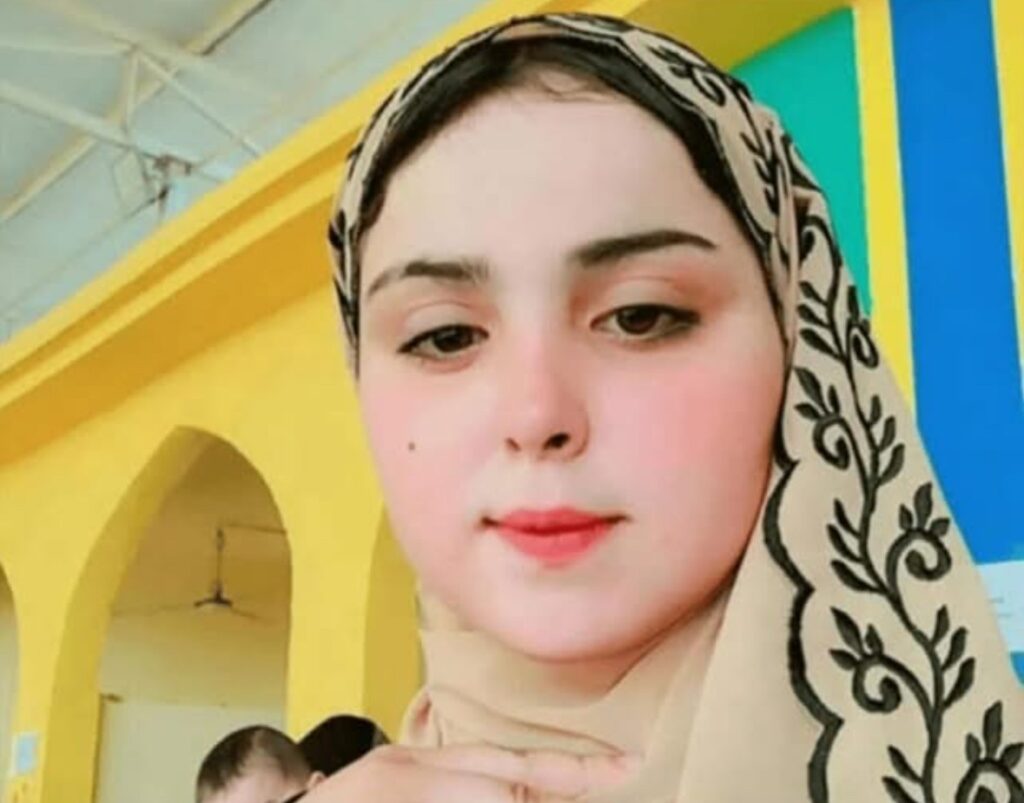
The story of 15-year-old Kawthar Bashar al-Husayjawi, brought to international attention through reporting by The Guardian, has shocked readers around the world and reignited debate over forced marriage, honour-based violence and the rights of women and girls.
According to The Guardian, Kawthar was allegedly murdered by members of her own family in Iraq after refusing to marry her cousin. The teenager had reportedly already been forced into marriage at the age of 13 before later obtaining a divorce. When she rejected a second arranged marriage, her decision allegedly cost her her life.
The details are horrifying. Yet the significance of this story extends far beyond Iraq.
At its core, this is a story about freedom: the freedom of a young woman to decide her own future, the freedom to reject a decision imposed by others and the freedom to live without fear of violence for exercising that choice.
Those freedoms are often taken for granted in Europe. They should not be.
Over the past decade, Cyprus has experienced significant migration flows from countries where child marriage, honour-based violence and severe restrictions on women’s autonomy remain documented realities. The overwhelming majority of migrants arrive seeking security, opportunity and a better life. Yet successful integration cannot be measured solely through residence permits, employment figures or economic participation. It must also involve a shared commitment to the fundamental rights that define democratic societies.
A girl living in Nicosia should enjoy the same rights as a girl living in London, Stockholm or Berlin: the freedom to decide whether, when and whom she marries. That principle cannot depend on family pressure, tribal expectations or religious coercion.
The questions raised by Kawthar’s death also resonate within Cyprus itself. Many readers will remember the large demonstrations that took place in northern Nicosia on May 2, 2025, when thousands of Turkish Cypriots protested regulations permitting headscarves in public secondary schools. Although very different from the tragedy that unfolded in Iraq, those demonstrations reflected concerns about many of the same underlying issues: the relationship between religion and public life, the protection of personal freedoms and the future direction of society.
For many Turkish Cypriots, the protests were not simply about school uniforms. They were about preserving a secular social model that has historically distinguished their community and which many see as essential to safeguarding individual liberty. The demonstrations also served as a reminder that many Turkish Cypriots continue to view secularism, equality before the law and personal freedom as core elements of their identity.
This matters because the Cyprus problem is ultimately about more than territory, property, security guarantees and constitutional arrangements. Any future reunification must also be built upon a shared civic foundation and a common understanding of fundamental rights.
A reunited Cyprus cannot thrive if democratic freedoms, women’s rights and individual liberties are understood differently on either side of the divide. Sustainable reunification requires more than political compromise. It requires a shared commitment to the principle that every individual, regardless of gender, religion or background, enjoys equal protection under the law and the freedom to make decisions about their own life.
In this respect, the Turkish Cypriot demonstrations of 2025 carry an important lesson. They remind us that many people on both sides of the Green Line are engaged in the same struggle: preserving a society where the individual is protected from coercion, whether political, religious or familial.
The death of Kawthar al-Husayjawi is first and foremost a human tragedy. But it is also a warning.
The struggle between freedom and control, between personal autonomy and social coercion, is not confined to Iraq. It exists across much of the Eastern Mediterranean, including on our own island.
Kawthar said no.
No girl, anywhere, should have to risk her life for doing the same.
Also read: Pseudostate calls Cyprus “window of opportunity” a publicity move
For more videos and updates, check out our YouTube channel
