

Climate scientists are warning that the climate risk has significantly increased ahead of the 2026 World Cup in North America, citing more frequent and intense extreme heat linked to human-driven climate change.
Researchers from World Weather Attribution (WWA) and academic institutions say conditions have worsened sharply since the 1994 World Cup, with half of all human-caused warming occurring in that period.
Heat stress could affect multiple matches
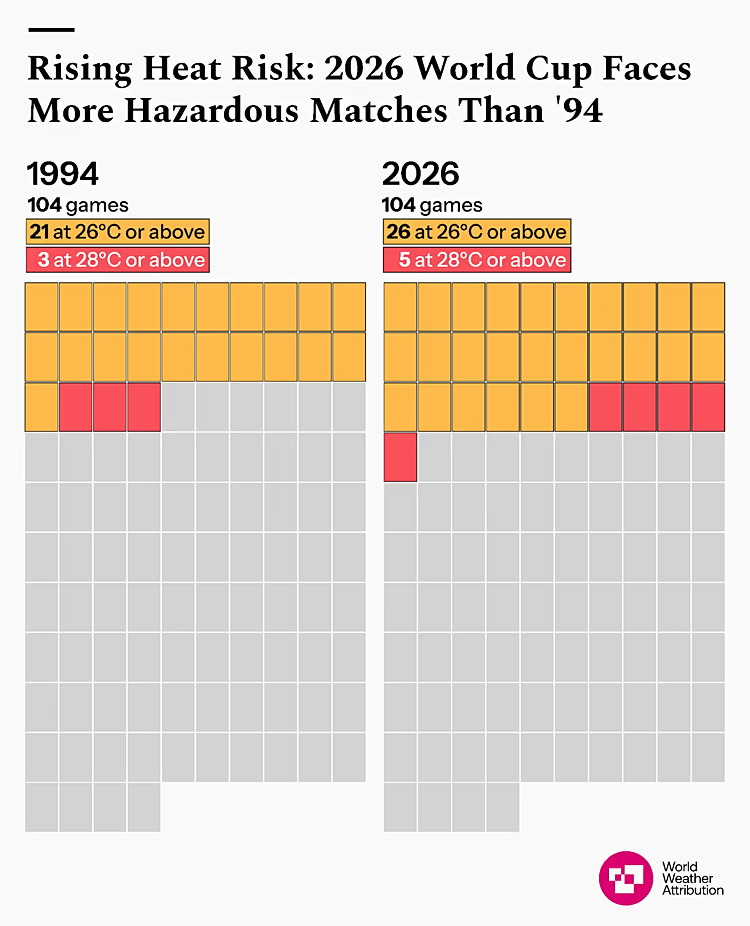
According to WWA analysis, around a quarter of matches could be played in conditions exceeding 26°C Wet Bulb Globe Temperature (WBGT), a level associated with moderate to high heat stress for athletes.
Experts warn that such conditions can reduce performance and increase the risk of heat-related illness, particularly during intense physical activity.
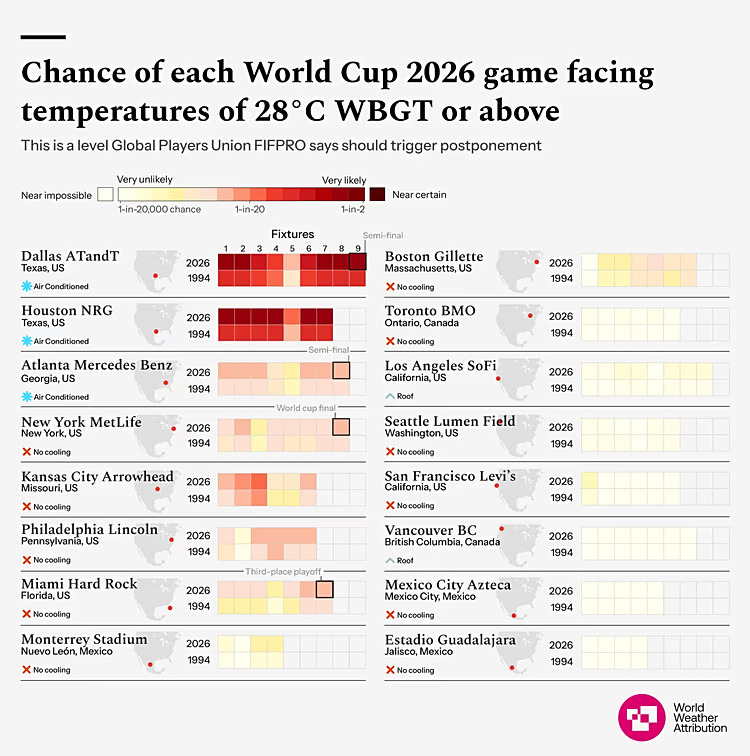
Some venues are expected to face especially high temperatures, including outdoor stadiums without air conditioning.
Concerns over player and fan safety
The climate risk is also raising concerns for spectators of the World Cup, with scientists warning that heat stress could become dangerous in stadiums and fan zones during peak summer conditions.
Heat stroke, described as the most severe form of heat illness, is highlighted as a potential threat, particularly for older fans and those with pre-existing health conditions.
FIFA mitigation measures under scrutiny
FIFA has introduced measures such as hydration breaks and later kick-off times to reduce heat exposure during matches.
However, climate experts argue that these steps may be insufficient, warning that some matches could still take place in unsafe conditions.
Proposals for postponement are only triggered at higher heat thresholds than those recommended by players’ unions, raising further concerns among scientists.
Calls for stronger climate action
Experts involved in the study warn that without stronger adaptation measures, including wider use of cooling infrastructure, staging major tournaments during summer could become increasingly dangerous.
They also call for faster global action to reduce fossil fuel use, arguing that climate change is already affecting major sporting events.
Some researchers further criticised FIFA’s commercial ties to fossil fuel companies, saying this creates a conflict with player welfare goals.
Information from Euronews
Also read: Fans warned of fraud risk as World Cup frenzy begins
For more videos and updates, check out our YouTube channel
