

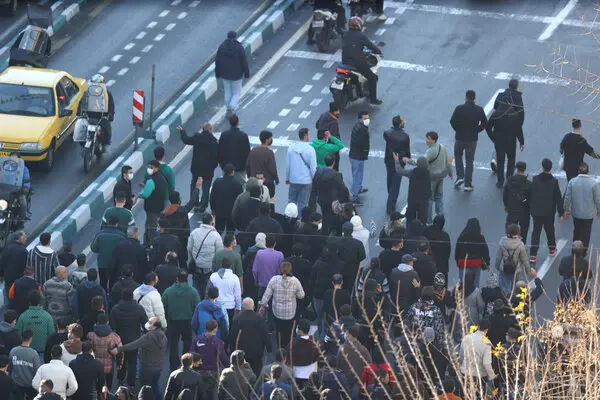
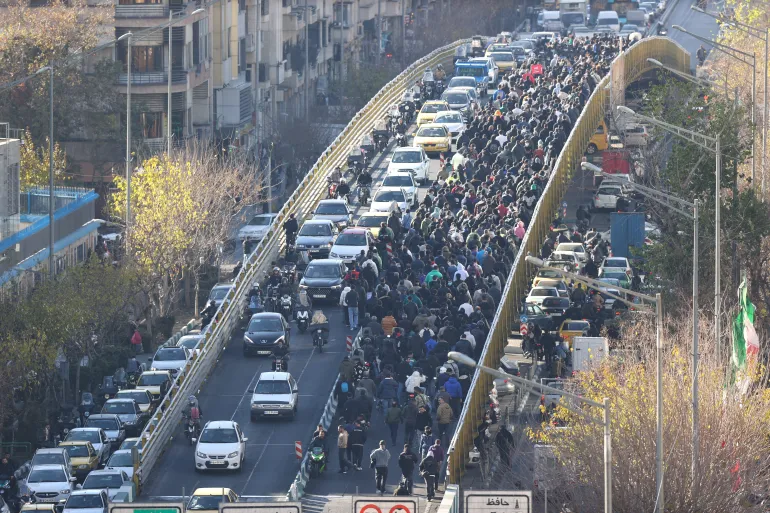
Protests grew bolder across Iran on January 6, 2026, with thousands taking to the streets despite heavy security deployments.
In Abdanan, Ilam province, families from children to elderly vastly outnumbered police, chanting defiantly beneath hovering helicopters.
Tehran’s historic Grand Bazaar saw shopkeepers shutter stores and clash with baton-wielding, tear gas-firing riot police, as crowds shouted “freedom” and branded officers “dishonourable.”
One protester yelled, “Execute me if you want – I’m not a rioter,” drawing cheers from onlookers. Demonstrations spread to Yaftabad marketplace, Lorestan, Kermanshah, Mashhad, Qazvin, Shahrekord, and Hamedan, where a woman braved winter police water cannons.
Hospital raid violates international law
Security forces stormed Imam Khomeini Hospital in Ilam city, targeting injured protesters from earlier Malekshahi military base clashes that killed at least three.
Graphic videos captured live gunfire scattering crowds at the gate. Amnesty International condemned the raid as an international law violation, highlighting authorities’ extremes to crush dissent.
State media confirmed a police officer’s death during funeral processions; investigations continue.
Economic freefall sparks fury
Iran’s rial plunged to a record 1.47 million per US dollar, eroding trust amid sky-high inflation ravaging food prices. Cooking oil tripled overnight, devastating the middle class battered since 2018 US sanctions followed nuclear deal withdrawal.
Moderate President Masoud Pezeshkian’s budget eliminated subsidized import currency rates, praised by economists fighting corruption but sparking immediate shortages. The government countered with meager 10 million rial ($7) online food credits, dismissed as inadequate.
Hardline government response
Supreme Leader Ayatollah Ali Khamenei demanded rioters be “put in their place.” Chief Justice Gholamhossein Mohseni-Ejei vowed “no mercy this time.”
Protests originated December 28 among shopkeepers rejecting foreign aid priorities, chanting “Neither Gaza nor Lebanon; my life for Iran.”
Public figures show solidarity
Renowned singers Homayoun Shajarian and Alireza Ghorbani cancelled concerts in protest support. Football legend Ali Daei went viral questioning officials’ humanity: “How can they sleep? Perhaps many aren’t even Iranian, feeling no sympathy for our nation.”
Source: Al Jazeera
Also read: Trump warns Iran as protests turn deadly
Subscribe to our Youtube channel for the latest updates.