

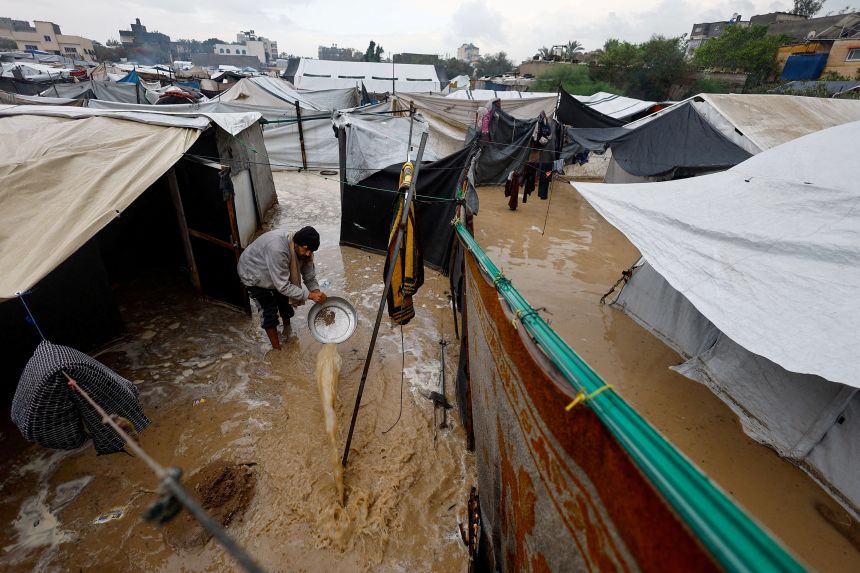
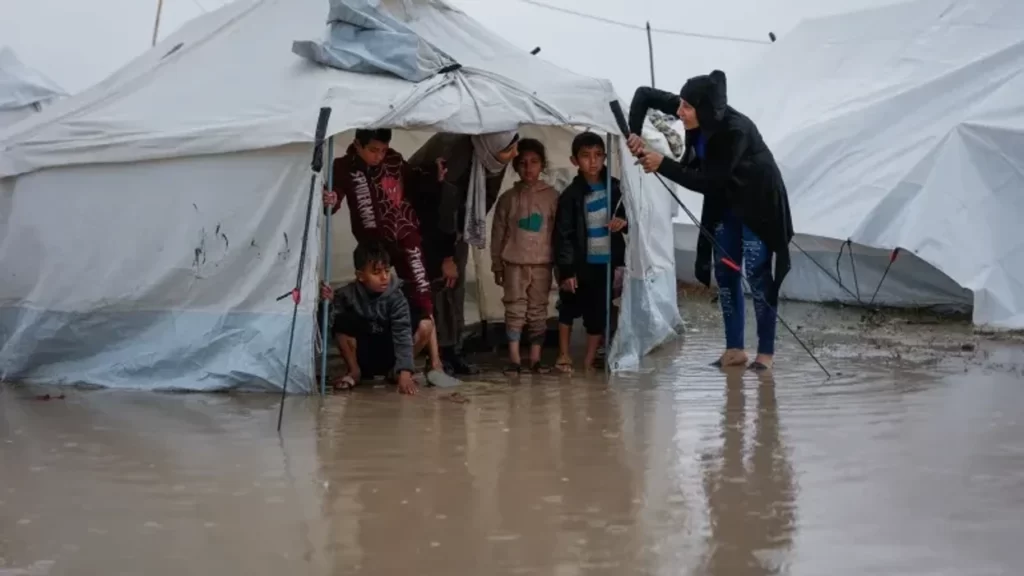
Severe weather lashed Gaza in the past few days, claiming 14 lives, including three children, according to Health Ministry DG Munir Al-Boursh. War-displaced Palestinians in tents faced catastrophe: flooded shelters, wading through sewage, mud, debris without protection.
Oxfam blamed “systematic aid obstruction”: “Storms become deadly when access denied; suffering manufactured by policy.”
Um Mustafa despaired to CNN: “Mattress, blankets, clothes soaked. Flour/rice ruined, I screamed for neighbors at night. Kids drenched.” 8-month-old succumbed to hypothermia.
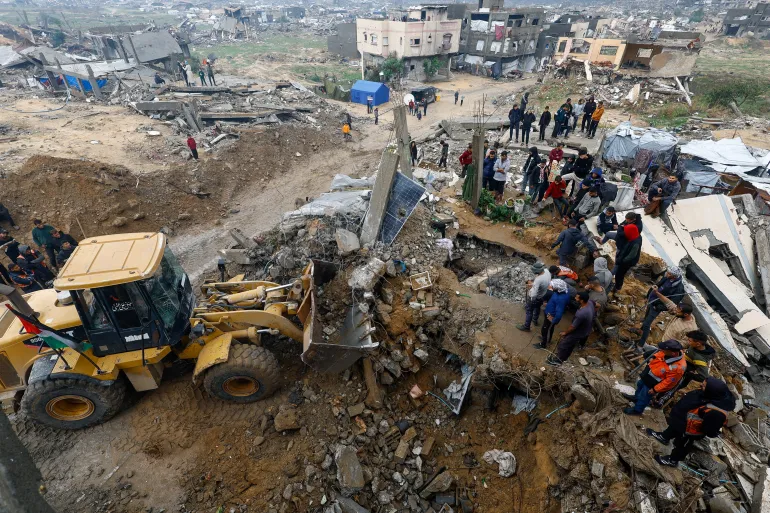
War’s lasting shelter crisis
The Coordination of Government Activities in the Territories (COGAT), the Israeli agency tasked with facilitating aid distribution in Gaza, said in a statement that Israel is “committed to” and “fully upholds” its “obligation to transfer humanitarian aid trucks in accordance with the agreement.”
“In this framework, hundreds of trucks enter each day carrying food, water, fuel, gas, medicines, medical equipment, tents and shelter equipment,” the agency said. “Over the last few months, COGAT coordinated with the international community and facilitated the transfer of close to 270,000 tents and tarpaulins directly to the residents of the Gaza Strip.”
“We are planning a catered humanitarian response for the upcoming winter,” COGAT said.
Despite Israeli Prime Minister Benjamin Netanyahu’s public embrace of the deal in September, significant gaps remain for the progression of the ceasefire agreement. The US is pushing to move quickly into the next phase, but Israel is conditioning major steps on the return of the final deceased hostage and has been resisting US efforts to resolve a standoff with a pocket of isolated Hamas militants in the Israeli-occupied parts of southern Gaza.
Source: CNN
Also read: Trump: Ukraine deal is closer, but US guarantees are temporary
Subscribe to our Youtube channel for the latest updates.
