

Australia’s already strict gun laws – world’s toughest post-1996 Port Arthur massacre (35 dead) – face overhaul after Bondi Hanukkah attack killed 15. PM Anthony Albanese announced National Cabinet agreement Monday for tighter controls despite low gun homicide rate (0.09/100,000, 31 murders 2023-24).
1996 reforms banned semi-automatics, launched buybacks (echoed New Zealand post-2019 Christchurch). Legal guns now exceed pre-1996 at 4M, per Australia Institute. No national firearms register yet; 4-year merge of state records underway, hampered by paper systems.
New measures target loopholes
- Licenses only for citizens
- Limits on gun numbers/types
- Expiring licenses for frequent checks
- Stricter imports (3D printing, high-capacity gear)
As a member of a gun club, the 50-year-old shooter in the Sydney attacks had a valid recreational gun license, police said, with six registered firearms. In New South Wales, several types of gun licenses are available, but holders must only use the firearm for the purpose specified. For example, members of gun clubs can apply for a license that says they’ll only use the gun for sport and recreational purposes.
New South Wales Premier Chris Minns has suggested the laws will be changed. “We want to make sure that prospective reform and change in New South Wales has a lasting impact,” he said during a press conference Monday.
“If you’re not a farmer, if you’re not involved in agriculture, why do you need these massive weapons that put the public in danger and make life dangerous and difficult for New South Wales police?” he added.
Port Arthur massacre sparked global model
1996 Tasmania tragedy – lone gunman killed 35 with semi-automatic in 90 seconds – prompted PM John Howard’s swift action. Within 12 days, nationwide laws banned rapid-fire rifles/shotguns, tightened licensing, mandated registration.
Federally funded buybacks, amnesties destroyed 1M firearms (1/3 national stock). Import bans followed, funded by special tax. Rural resistance hit Howard’s base, but public shock prevailed.
Dramatic results proven
Gun deaths dropped over 50%; firearm suicides fell 78% in the decade after. No mass shootings in 29 years. PM Howard (2013): “Reforms slashed murders and suicides; everyone agrees.”
Before 1996: 100+ killed in massacres over a decade. Unlike America’s 300M+ guns, 2nd Amendment, and NRA power, Australia had no constitutional barriers and lower baseline. Howard told CNN: “More guns mean more murders.”
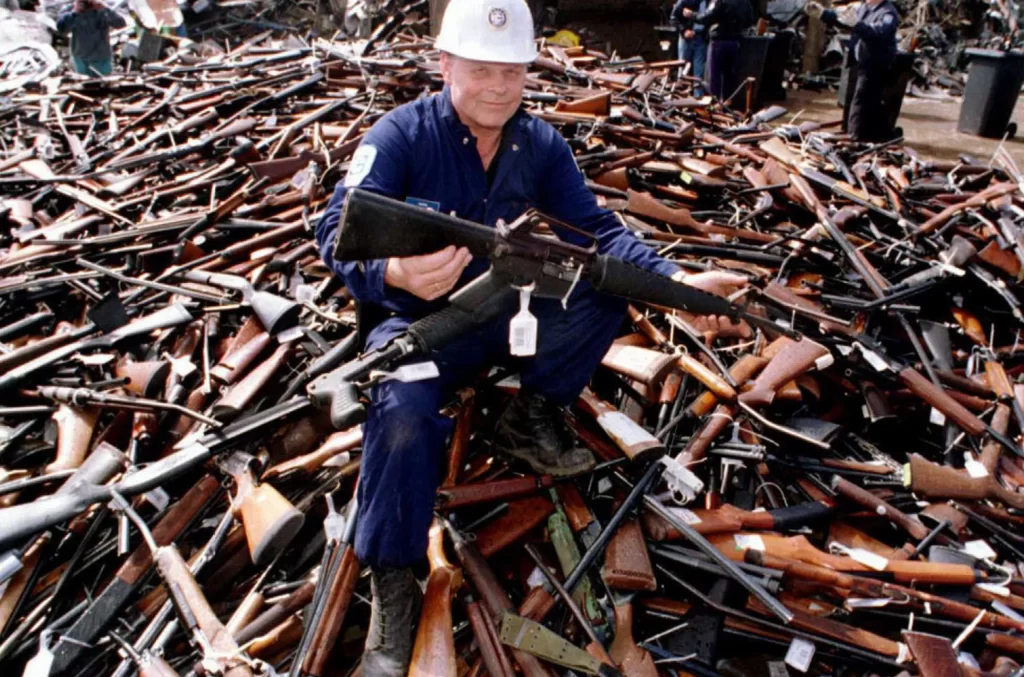
Source: CNN
Also read:
Subscribe to our youtube channel for the latest updates.