

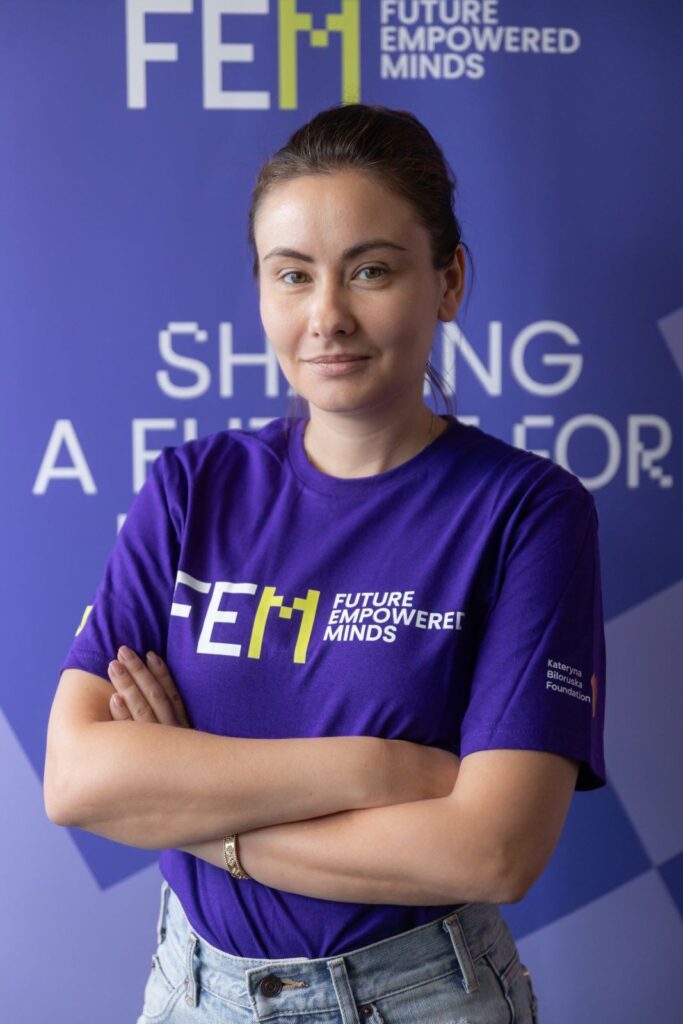
Kateryna Biloruska, founder of the Kateryna Biloruska Foundation
After successfully concluding the first FEM Online Program with nearly 500 applications and 60 participants from around the world, Kateryna Biloruska reflects on what it takes to create meaningful change for teenage girls – and why this work matters more than anything she’s built before.
What inspired you to create a program specifically focused on empowering teenage girls?
The answer comes from my own experience. I spent years in business learning through struggles, mistakes, and figuring out what actually works. I realized that the most successful leaders today aren’t the ones who try to be aggressive or “hard” in a traditionally masculine way. They’re the ones who use soft power – empathy, collaboration, understanding psychological patterns of communication.
I thought: why should the next generation of girls have to learn all of this through trial and error the way I did? Why not give them these tools earlier? And I know so many impressive leaders who have valuable experience to share with young women. Our society needs new voices and new energy. Why couldn’t that be young women?
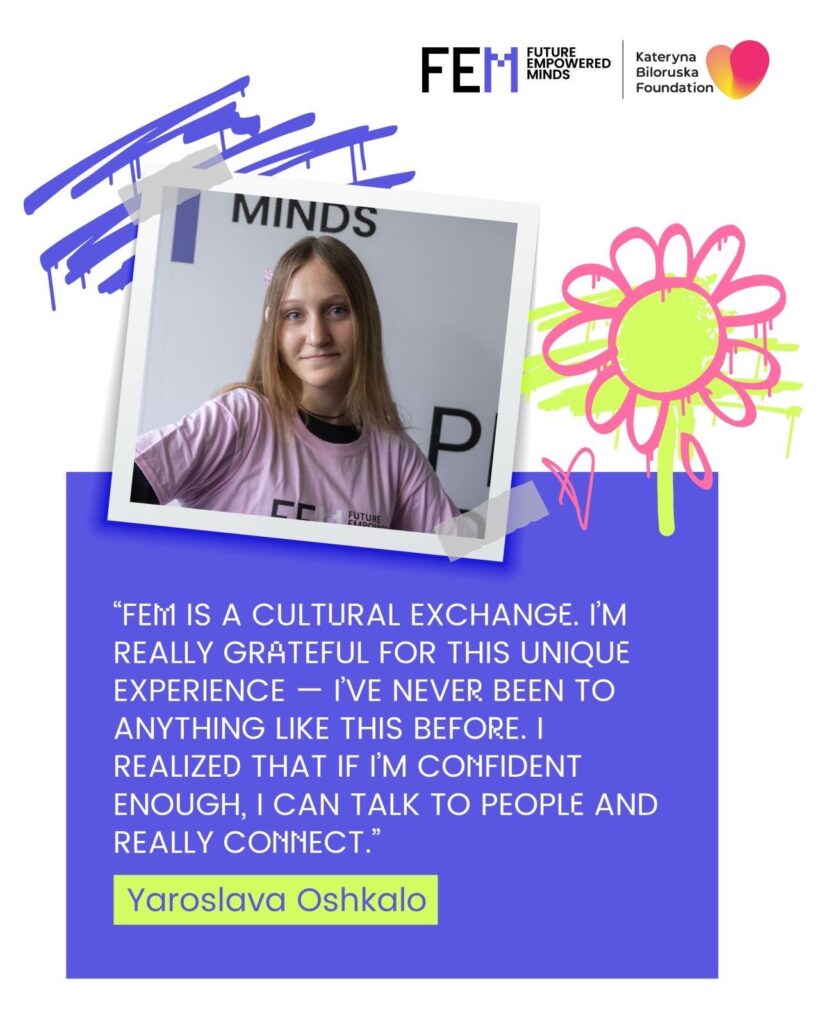
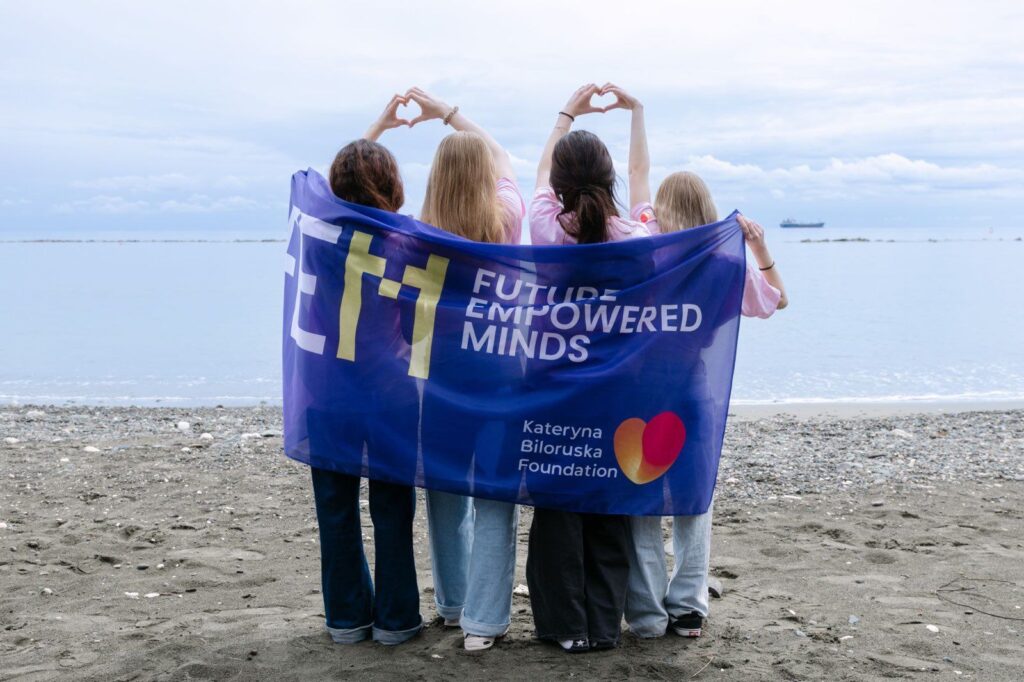
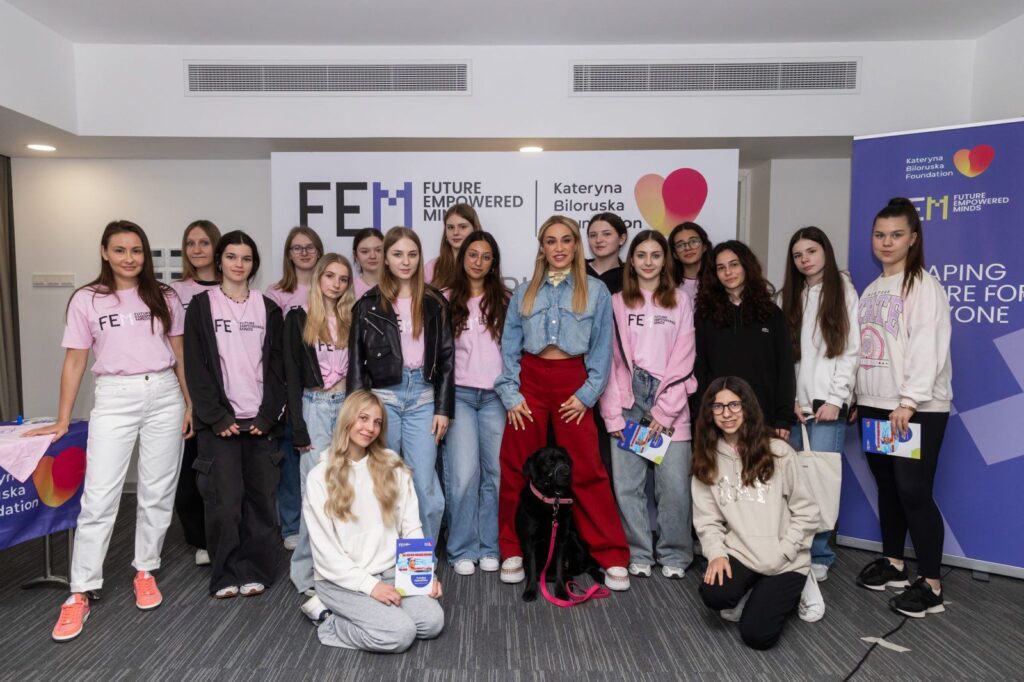
The FEM Online Program just wrapped its first season. Nearly 500 applications, 60 girls selected, six teams presenting final projects. What surprised you most?
Honestly, the sophistication of their thinking. These weren’t just theoretical presentations about what they learned. They were real initiatives – researched, planned, ready to implement. The confidence in their delivery, the clarity of their vision.
The winning team, Girl Empower, presented a financial literacy project for girls that was simple, practical, and genuinely needed. They’re getting a grant from our Foundation to bring it to life. But what struck me across all the projects was that these girls weren’t asking for permission to lead. They were just leading.
You’ve said you’ll be happy if just 3% of FEM participants become changemakers in 10 years. That seems modest for someone investing so much effort.
It’s realistic. Creating leaders takes time, and not everyone will go that path – and that’s okay. Even if 3% of the girls we work with become leaders who influence change and make a positive impact on society, that’s enormous over time.
But there’s a second mission that’s equally important: giving them self-confidence and practical life skills. We work with girls who often lack opportunities – low-income families, those affected by geopolitical situations, vulnerable groups who don’t have access to courses or camps. In Cyprus, where our foundation is based, we want to reach girls from agricultural schools in mountain districts who know little about life outside their communities. Even if they don’t become CEOs, if they gain tools to change their own lives, that matters.
The program is completely free and international by design. Why was that non-negotiable?
Two reasons. First, if we’re serious about empowering girls who lack opportunities, we can’t put a price barrier in front of them. The girls who need this most are often the ones who can’t afford it.
Second, the world is global now. You never know which nationality you’ll work with. I learned this in my career – people are different in mentality, in how they work, build relationships. It’s important for girls to understand their own culture first, then learn about others. When you work with people from different cultures, you do things differently. You need to know how to interact, how to communicate so they understand.
We want to build a global sisterhood. Girls should understand they can support and help each other. When women do something together, they have strong energy and synergy that can really change the world.
You started with emotional intelligence and self-regulation before teaching technical skills like financial literacy or AI. Why that order?
Because you can’t build a house without a foundation. These are teenagers at a challenging age between childhood and adolescence. The first things we work on are self-regulation and understanding who they are. How to accept changes – emotional and physical. How to overcome fears, because they have a lot of fears.
I think emotional awareness is crucial for leaders. You can be very competent, but if you cannot control your temper or overcome situations where emotions take over, you cannot be successful. Emotional intelligence helps them not just to be leaders but to be successful people in family, friendships, learning, and life.
We start with self-understanding, and only after they feel grounded and know who they are do we give them other skills like storytelling, financial literacy, effective communication. Before that foundation exists, they cannot fully understand or apply the knowledge we give.
Beyond FEM, you’re also a mother of two daughters. Does that change how you think about this work – knowing you’re literally building a world they’ll inherit?
Yes. Absolutely. Every decision I make with FEM, I think about them. I want my daughters to grow up in a world where their voices are heard, where their potential isn’t questioned, where they see other women leading and know that’s normal – not exceptional.
I’m building the world I want them to live in. Where being a woman in leadership isn’t remarkable because you had to fight for it – it’s simply expected because we invested in girls early enough that by the time they’re adults, leading feels natural.
When I watch the FEM girls present with confidence, answer tough questions, defend their ideas – I think: that’s what I want for my daughters. And for every daughter. This isn’t just about my kids, but yes, knowing they’ll benefit from the world we’re creating makes this work even more personal.
Final question: You’ve mentioned this work gives you deep satisfaction. What makes it different from other achievements in your career?
I’m still doing business and investing – I believe in both. But impactful projects like this really drive me now. I’ve always been excited to create something, and this gives me the feeling that I’m changing someone’s life for the better.
In business, you can build something successful and achieve goals. But this? When a girl who didn’t believe in herself three months ago stands up and presents an idea that could genuinely help her community – that’s the most important thing for me. That feeling is irreplaceable.
Applications for FEM Online Program 2.0 are now open at: https://form.typeform.com/to/yKvfLiL0
Also read: Voices of Change – Kateryna Biloruska
