

Teachers, train drivers, pharmacists and hospital staff went on strike and teenagers blocked their high schools in France on Thursday, part of a day of protests against looming budget cuts.
Unions are calling for the previous government’s fiscal plans to be scrapped, for more spending on public services, higher taxes on the wealthy, and for the reversal of an unpopular change making people work longer to get a pension.
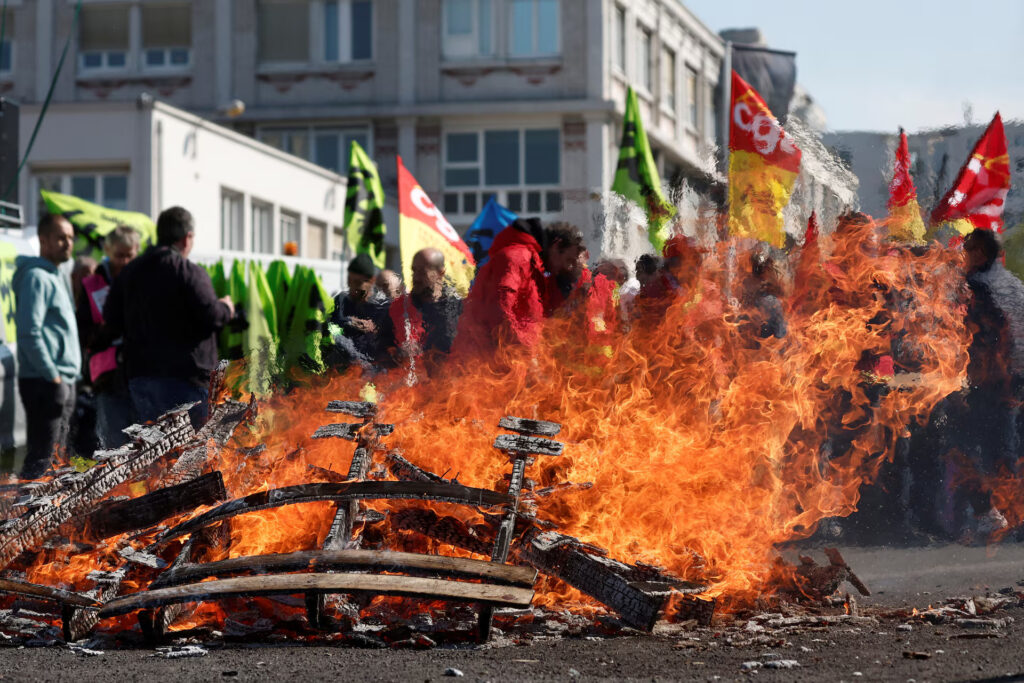
In Paris, many metro lines were set to be suspended for most of the day except for morning and afternoon rush hour. Pupils gathered to block the entrances to some schools.
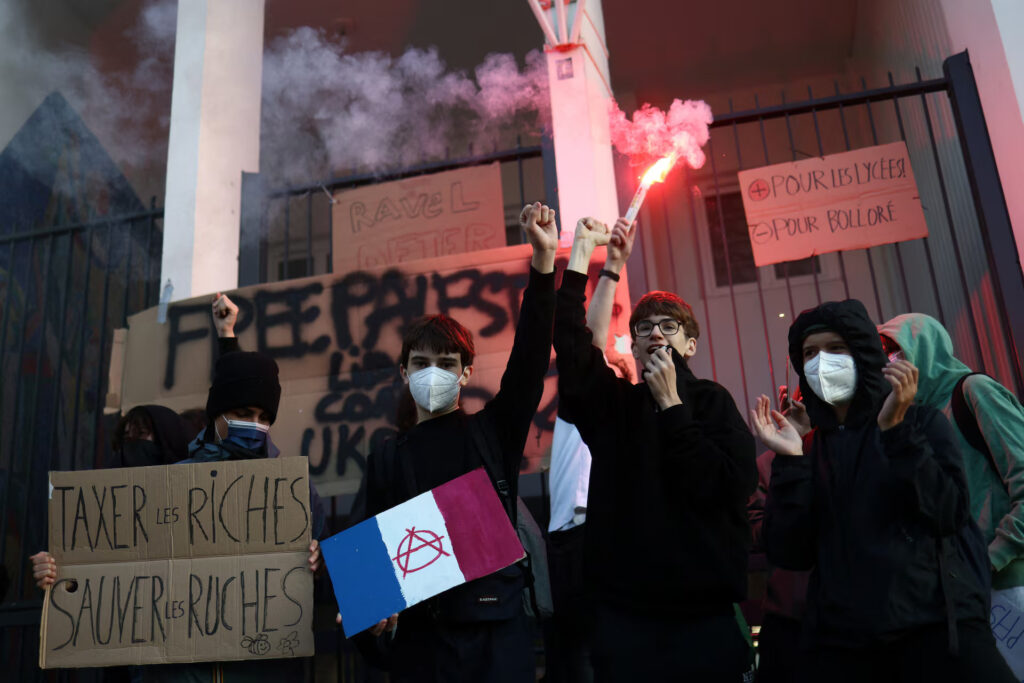
“Block your high school against austerity,” read a placard raised by a student in front of the Lycee Maurice Ravel high school in the French capital, where the gathering included teachers and workers’ representatives.
“Workers are currently so despised by this government and by (President Emmanuel) Macron that, in fact, it can’t continue like this,” bus driver and CGT union representative Fred said at a rally in front of the high school.
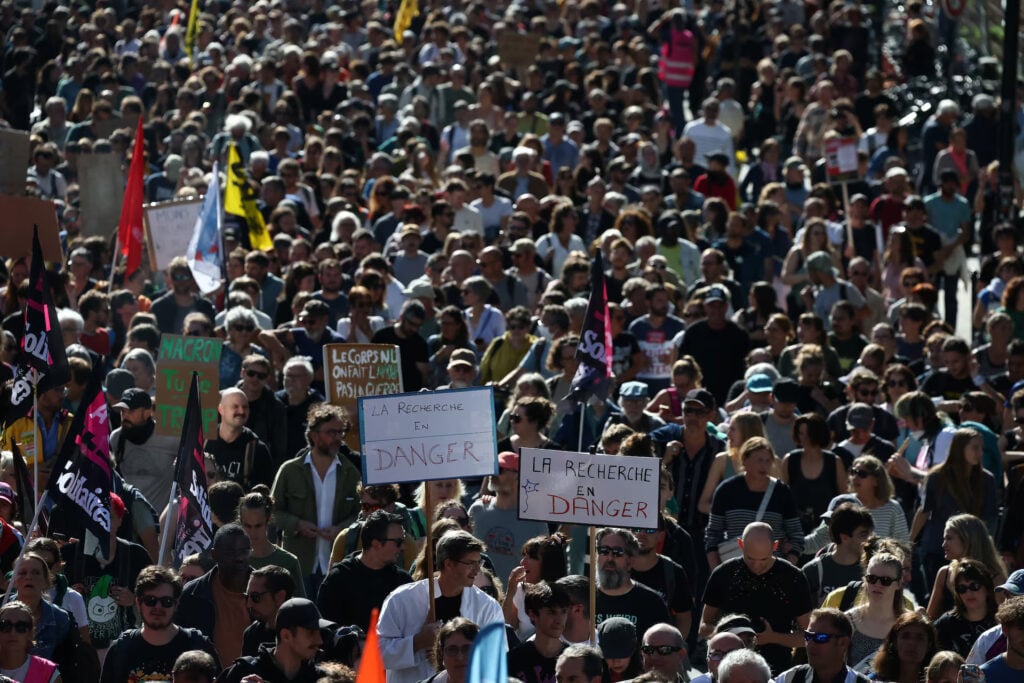
“I am here to defend public services,” 33-year-old teacher Gaetan Legay said at the same rally, “in particular, to demand that public money goes back into public services … rather than to large companies or in tax gifts to the ultra-rich.”.
Macron and his newly appointed Prime Minister Sebastien Lecornu are under pressure from parliament over the likely budget cuts and from investors concerned about the deficit in the euro zone’s second largest economy.
Workers angry over fiscal plans
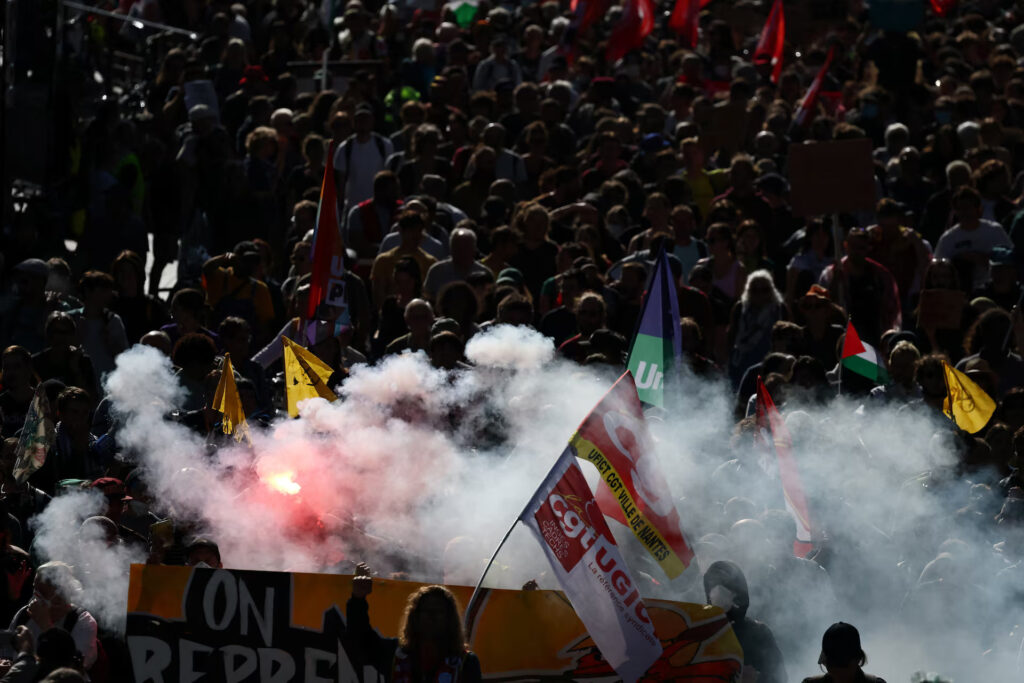
An Interior Ministry source said that as many as 800,000 people were expected to take part in the strikes and protests.
“The workers we represent are angry,” the country’s main unions said in a joint statement in which they rejected the previous government’s “brutal” and “unfair” fiscal plans.
France’s budget deficit last year was close to double the EU’s 3% ceiling but much as he wants to reduce that, Lecornu – reliant on other parties to push through legislation – will face a battle to gather parliamentary support for a budget for 2026.
Lecornu’s predecessor, Francois Bayrou, was ousted by parliament last week over his plan for a 44 billion euro budget squeeze. The new prime minister has not yet said what he will do with Bayrou’s plans, but he has signalled a willingness to compromise.
Protests hit schools, trains
One in three primary school teachers were on strike nationwide, and nearly one in two walked off the job in Paris, the FSU-SNUipp union said.
Regional trains were heavily affected by the strike, while most of the country’s high-speed TGV train lines worked, officials said. Protesters gathered to slow down traffic on a highway near the southeastern city of Toulon.
Nuclear production at French utility EDF was slightly down, by 1.1 gigawatts early on Thursday, data from the company showed, as workers lowered power output at the Flamanville 1 reactor.
The farmers’ union Confederation Paysanne has also called for mobilisation. Pharmacists are angry over changes affecting their business and the USPO pharmacists’ union said a survey it did among pharmacies showed 98% could close for the day.
Interior Minister Bruno Retailleau told reporters early on Thursday that police had already removed some blockades, including in front of bus depots in the Paris region. He warned that he expected as many as 8,000 troublemakers to try to “sow disorder” and clash with police.
Some 80,000 police and gendarmes will be deployed throughout the day. Riot units, drones and armoured vehicles will be on hand.
More than 20 people had already been arrested on various sites, police said.
Plans to move the 70-metre (76-yard) long Bayeux tapestry, a masterpiece whose stitching tells the story of the Norman invasion in 1066, were delayed because of the strike, the local prefecture said. The tapestry is set to be loaned to Britain.
Also read: Block Everything protests plunge France into chaos
For more videos and updates, check out our YouTube channel.
Source: Lucien Libert and Mathias de Rozario – Reuters