

Thanasis Michael, a 34-year-old Cypriot, has always had coffee at the heart of his life. From working at two popular coffee chains to serving customers at M&S Café in the Arndale Centre, coffee has been a defining aspect of his daily routine.
When he was given the opportunity to open his own café, he seized it, never looking back.
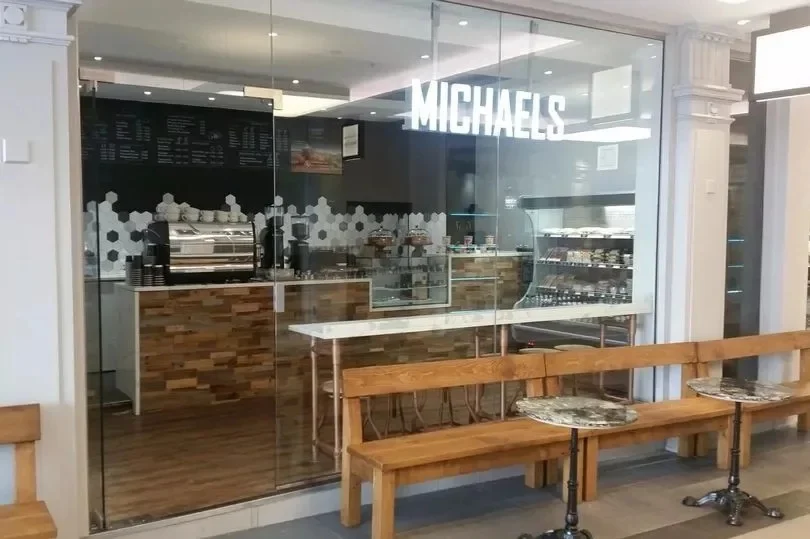
Today, Michael’s Coffee House operates in two locations in Manchester city centre: one at the Royal Exchange and another at the Arndale Centre. Remarkably, the business is now valued at an impressive £1.2 million.
A challenging journey
Thanasis’s journey to success wasn’t easy. It all began in 2013 when, at the age of 22, he moved to Manchester from Cyprus to escape the financial crisis.
Having worked for a coffee chain in Cyprus, Thanasis initially found a job at M&S Café in the Arndale Centre. He later worked for another well-known coffee chain, first at the Trafford Centre and then at the Arndale.
During this time, he first considered opening his own café. A coffee franchise owner in Greece, a contact of his father, encouraged him to pursue this idea, even suggesting they open a shop together in Manchester.
Thanasis, now a father and resident of Miles Platting, explored several locations, but the franchise owner eventually stopped responding to his messages.
Determined to proceed independently, Thanasis decided to open the café on his own.
“I showed him a location, but he never replied to my message,” Thanasis told the Manchester Evening News. “I said, ‘I’ll open it myself.’ I was persistent. I said I’d do it on my own.”
Overcoming financial challenges
With limited resources, Thanasis approached several banks for a loan, only to face repeated rejections.
“They wouldn’t even listen to me or look at my business plan,” Thanasis recalled. At the time, he was just 25 years old.
Eventually, one bank saw potential in his proposal and approved a loan.
With financial support from his cousin, who travelled from Cyprus to back the venture, Thanasis opened Michael’s Coffee House in August 2017.
“I went to many banks to get a loan because I didn’t have any money,” he added. “It was really tough. They told me they didn’t give loans for restaurants or cafés because they’re high-risk businesses, and I was only 25.
But one bank reviewed my plan and was very impressed. They said they liked the plan.”
Building a popular destination
Michael’s Coffee House quickly became a popular spot in Manchester city centre. The Royal Exchange location stood out for its high-quality coffee and treats like croissants, vegan yoghurts, and handmade toasties. Drinks such as the Pistachio Latte became customer favourites.
However, Thanasis faced new challenges after the pandemic when his cousin decided to leave the business and return to Cyprus. Thanasis bought his cousin’s share, taking full ownership of the café.
Despite these difficulties, the business continued to grow, achieving steady annual increases in activity.
In 2024, things improved so significantly that Thanasis was able to open a second location in the Arndale Centre.
The new café opened on 2 December, and both locations now employ a total of 24 staff members.
A philosophy of hard work and perseverance
“I’m happy, to be honest,” said Thanasis. “I’m satisfied. All of this came through hard work—working day, night, weekends, and sacrificing a lot to get where we are today.
You have to be persistent in life. You can’t take ‘no’ for an answer; you have to fight and not be afraid. You need to believe in yourself. That’s very important—no one else will believe in you.”
Thanasis now hopes to expand further into prime locations such as the Trafford Centre and Piccadilly Station.
Also read: Launch of C Business Advisors in the consulting services sector